
Let’s be real for a second. When I started reselling, I wasn’t exactly rolling in cash. I didn’t have a startup budget, and I definitely didn’t have a professional “office.” I just had a goal: build a business without spending a dime of my own money.
I call it the Zero-Dollar Challenge. It’s about using what you have to get what you want. I started by selling stuff I found around my house, and I didn’t buy a single piece of fancy equipment until the business paid for it.

1. Start with the “Boring” Stuff
My first sale ever? A PS2 game called Rollercoaster World. I didn’t even like the game. I played it once, hated it, and it sat on a shelf for years. I listed it and made $8.
It wasn’t a jackpot, but it was proof.
The Pro Tip: Even if you’re doing the zero-dollar method, pay yourself. I recommend taking a small percentage (even just 5% or 10%) of every sale and putting it in your pocket. It’s not about the money—it’s about the motivation. Seeing that “fun fund” grow makes the late-night packing sessions worth it.
2. The Power of the Bed Sheet
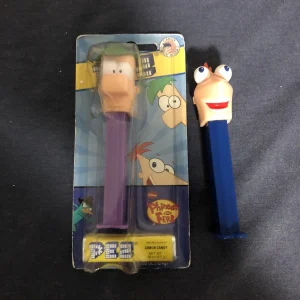
You don’t need a light box or a studio. I started with a clean blue bedsheet pinned to the wall and a basic lamp.
My biggest “bedsheet win” was a 1980s Fisher-Price tub toy. I almost didn’t list it, but it ended up selling for over $200. Nobody cared that the background was a sheet; they cared that the toy was rare and the photos were clear.
What you actually need to start:
- A clean bedsheet (or a plain wall).
- A lamp (natural window light is even better).
- A ruler or tape measure.
- A kitchen scale (borrowed from the kitchen… until your wife gets tired of it).
3. The “Scale” Incident (The First Upgrade)
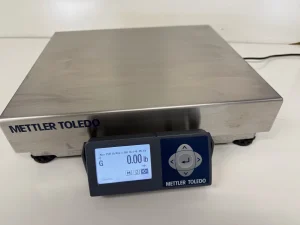
Eventually, you’ll start making enough profit to buy your first tool. For me, it was a dedicated shipping scale.
My wife was getting pretty frustrated because her kitchen scale was constantly missing when she actually needed to cook. Buying my own scale was a game-changer. It’s the first thing I recommend grabbing once you’ve earned so profit. It saves your marriage and your shipping accuracy.
4. Don’t Get Lost in the “Death Pile”
When I started, I was messy. I threw my inventory into random boxes stuffed under my resell table. It was total chaos.
Once, I sold a small part for a set and spent hours digging through boxes, only to realize I couldn’t find it. I had to cancel the order, which hurts your seller rating. I found the item three days later, hiding at the bottom of a “death pile.”
The Lesson: Stay organized from Day 1. Use labeled bins or boxes and give everything a “home.” It saves you hours of stress later.
5. Knowledge is Your Secret Weapon
I started this website because, in the reselling game, knowledge is more important than money. You can have $1,000 to spend, but if you buy junk, you’re just a hoarder with a hobby. Study browse the bolo list section, I recommend specializing in an area that you become an expert in (Like vintage games or tools or cassette tapes) that you can scan and know the prices of the items immediately. Then slowly grow into other sections, this will save you tons of time at thrift and garage sales and keep it fun.
Before you buy something, check the Sell-Through Rate (STR):
- Open eBay.
- Search for the item.
- Filter by “Sold Listings.” If 100 people are selling it but only 2 have sold in the last month, put it back. You want items that move.
The “Everyday” Roadmap
- Find stuff around the house you don’t want.
- List it using a bedsheet background and a lamp.
- Reinvest the profit into garage sales and thrift store finds.
- Be Patient. Items don’t sell overnight. Sometimes they do, but that’s the exception, not the rule. Keep listing, keep learning, and stay awesome.
Leveling Up: What to Buy When the Profits Start Rolling In
Once you’ve made some sales and that “reinvestment fund” is looking healthy, don’t just spend it on more inventory. Spend it on speed and accuracy. These are the tools that changed the game for me, and I recommend getting them in this order:
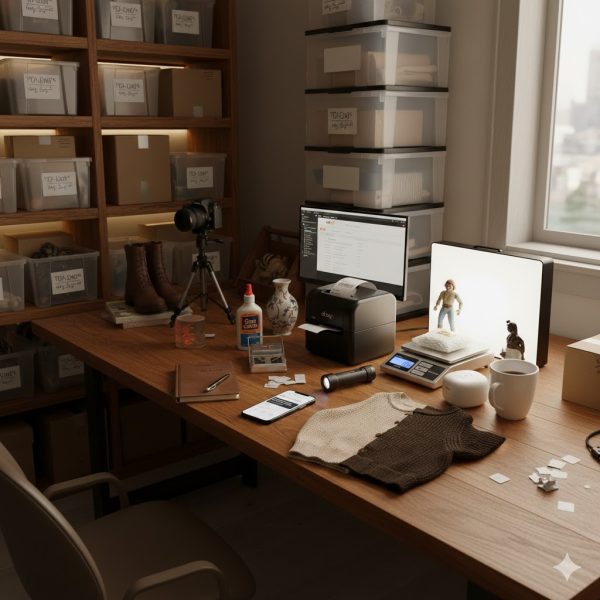
- A Solid Shipping Scale: As I mentioned, get off the kitchen scale! A dedicated shipping scale handles heavier boxes and gives you peace of mind.
- A Light Box Set-Up: When you’re ready to ditch the bedsheet, a light box or a basic “softbox” light kit is huge. It gives you perfect, bright light every time, meaning you can take photos at 2 AM and they’ll look like they were shot at noon.
- The “Pro” Hunter Kit (Blacklight & Jewelry Scale):
- Blacklight: Essential for checking for repairs on porcelain, looking for “uranium glass,” or verifying older paper items.
- Precision Jewelry Scale: When you start finding silver, gold, or high-value pins at garage sales, you need to know exactly what they weigh. A kitchen scale won’t cut it for grams.
- A Label Printer: Cutting out paper labels and taping them onto boxes is a time-sucker. A thermal label printer (like a Rollo or Munbyn) is probably the single best “quality of life” upgrade you can buy.
- Cleaning Tools (Goo Gone & Fabric Shaver): * Goo Gone: To get those crusty thrift store price stickers off without ruining the item.
- Fabric Shaver: To take a pilled-up $5 hoodie and make it look “Like New” again. This tool literally pays for itself in one use.
- A Power Bank: Nothing is worse than being at a massive garage sale and having your phone die. Keep your “brain” (the eBay app) powered up.
- Organization Supplies (Bins & Labels): Invest in clear plastic bins and a way to label them. Create a system with SKU numbers so that when an item sells, you aren’t hunting for it—you’re just grabbing it and shipping it.
Ready to Level Up?
Once you’ve got a few wins under your belt, check out our BOLO (Be On the Lookout) Section. It’s where we drop the knowledge on what’s actually selling right now so you can hunt with confidence.